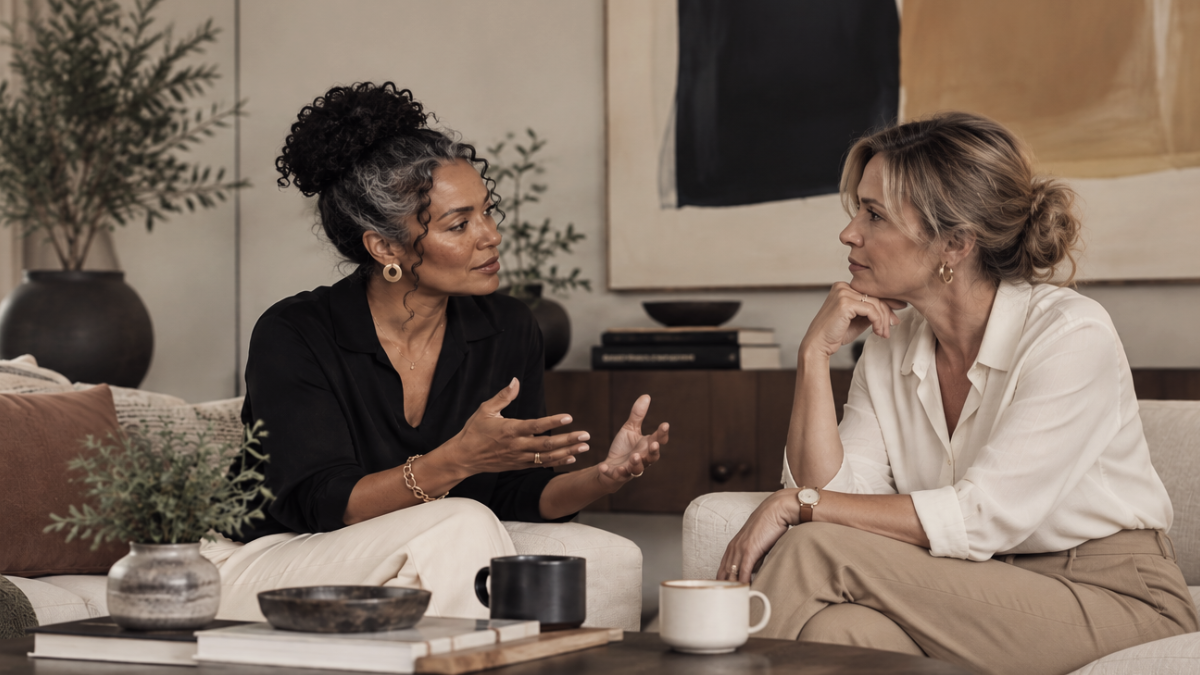
We’ve become much better at talking about mental health over the last few years.
And yet, we’re still talking about it.
That isn’t because the conversation has failed. It’s because mental health isn’t a box we tick once and move on from. It changes with our circumstances, relationships, work, physical health, sleep, stress levels and the different stages of life.
In fact, the World Health Organization’s latest global data estimates that more than one billion people are living with a mental health condition worldwide.
So yes, we are still talking about mental health in 2026.
Mental health isn’t just about mental illness
One of the most useful shifts in the conversation has been recognising that mental health exists on a spectrum.
You don’t have to have a diagnosed mental health condition to experience stress, overwhelm, loneliness, low mood, anxiety or emotional exhaustion. Equally, having a good period doesn’t mean mental health will remain unchanged forever.
Mental health is a state of mental wellbeing that helps us cope with life’s stresses, realise our abilities, learn and work well, and contribute to our communities. It is part of overall health, rather than something that exists separately from it.
That distinction matters because it moves the conversation away from waiting until something is seriously wrong, to being proactive about it, just as you would be with your physical health.
Mental wellbeing deserves attention before the crisis point.
Why life in 2026 hasn’t made this irrelevant
We have more ways to connect than ever, yet many people still feel disconnected.
We have more information, but that doesn’t necessarily make decisions easier.
We can work from almost anywhere, which can also mean never really switching off.
Our phones have turned waiting for something into an opportunity to consume something – another message, another headline, another notification, another comparison.
None of these things automatically damage mental health. But they contribute to an environment in which our attention is constantly being pulled in different directions.
Then add the ordinary pressures of adulthood: work, relationships, finances, parenting, caring responsibilities, uncertainty and the expectation that you should somehow keep everything running smoothly.
It makes sense that mental health remains a relevant conversation.
The mind and body were never separate
We often talk about mental and physical health as though they are two different projects.
They aren’t.
The WHO describes mental and physical health as closely connected, with each able to affect the other.
Sleep is an obvious example. When sleep quality deteriorates, concentration, energy and emotional regulation can become harder. Stress can affect physical systems including the digestive, immune and cardiovascular systems. And when we’re physically run down, maintaining emotional resilience can become more difficult.
This doesn’t mean that exercise, nutrition or a good night’s sleep can replace treatment for a mental health condition. They can’t.
Still, physical wellness can be one of the foundations that helps support mental wellbeing.
Your physical wellness can contribute to your mental wellbeing
This is where the basics still matter.
Regular movement, balanced meals, hydration and sufficient sleep can support both physical and mental health.
It doesn’t mean that everyone needs an elaborate wellness routine.
Simple things count: A walk outside, a proper lunch instead of another coffee, going to bed instead of scrolling for another hour, strength training, or simply taking a break before you’re completely depleted.
And when the demands of life are especially high, some people choose to explore additional support for hydration, nutrient status, recovery and performance.
At The IV Bar, IV nutrient therapy provides fluids and selected nutrients that are administered directly into the bloodstream under the supervision of registered nurses. It isn’t a treatment for mental health conditions, and it isn’t a substitute for sleep, nutrition, exercise or professional psychological care.
Instead, it can form part of a broader approach to physical wellness, recovery, performance and longevity, depending on individual needs and medical suitability.
Mental health is also about connection
There is another piece of the puzzle that deserves more attention: other people.
Social connection is an important component of health, with meaningful relationships supporting mental, physical and brain health across the lifespan.
Sometimes mental health support looks like therapy. Sometimes it looks like asking a friend to come for a walk. Sometimes it is admitting that you’re not doing brilliantly and allowing somebody else to show up for you.
And sometimes it means being that person for somebody else.
We don’t need to turn every friendship into a therapy session. But we can become better at noticing when someone is withdrawing, checking in without demanding an explanation, and creating spaces where people don’t have to pretend everything is fine.
Knowing when to ask for more help
Wellness habits have their place. They are not a substitute for professional care.
If low mood, anxiety, sleep problems, loss of interest, difficulty concentrating or other symptoms persist and begin interfering with everyday life, it is worth speaking to a healthcare professional.
There is no prize for waiting until things become unbearable.
Why we’ll still be talking about this in 2030
Mental health isn’t a trend.
It isn’t a month on the calendar, a hashtag or a conversation we can declare finished because we’ve become more comfortable saying the words.
It is part of being human.
And perhaps the real progress isn’t getting to a point where nobody struggles. It’s creating a culture where people recognise the signs earlier, ask for support sooner, look after their physical and social wellbeing, and understand that taking care of your mind is part of taking care of your whole self.
The IV Bar offers personalised wellness solutions designed to support broader goals around hydration, recovery, performance and longevity. Speak to a registered nurse to explore what may be appropriate for you.
P.S. If someone close to you is going through a tough time, our gift vouchers are the perfect way for you to show them someone cares and encourage them to put their wellness first.